Stump Grinding by Diameter and Depth Below Grade
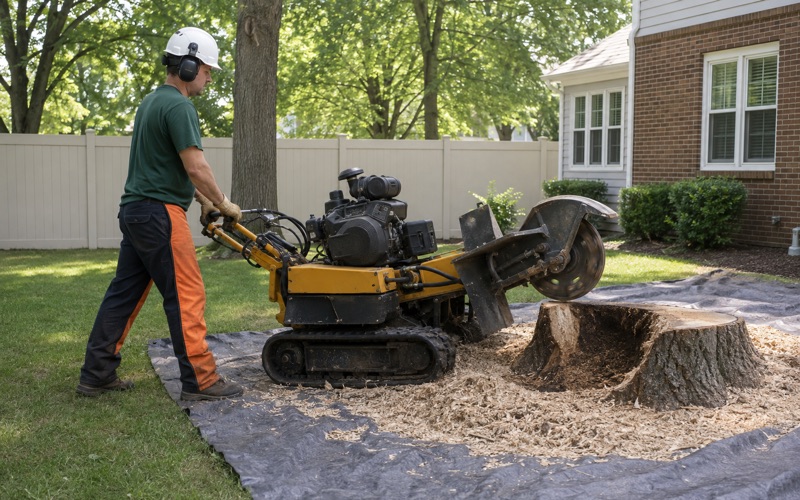
Stumps are quoted by diameter across the cut face and by how far below grade the grindings are taken — a few inches for grass, deeper for a patio, a footing or a replanting. On the Harpeth and Mimosa ground mapped under most of this city, a grinder cutting six to twelve inches below grade works in soil rather than against a rock shelf, though depth to rock stays a per-parcel question.
Grinding a Stump Against Excavating the Whole Root Ball
Grinding removes the stump and major surface roots and leaves the rest to decay in place; excavation pulls the root ball out whole and leaves a crater plus a spoil pile. Grinding is cheaper, faster and far less disruptive to turf and irrigation, and it is right for almost every residential stump. Excavation earns its cost only where a footing or a pool shell must occupy that volume.
What Happens to the Grindings, and Who Backfills the Hole
A ground stump produces a surprising volume of chips — more than came out of the hole, because the material is aerated. Somebody has to decide whether they stay as a mound to settle, get raked into beds, or are hauled off with the void backfilled in topsoil. We settle that on the estimate, since a homeowner expecting bare dirt has a legitimate complaint otherwise.
Trunk Rounds, Brush, and the Debris Nobody Quotes
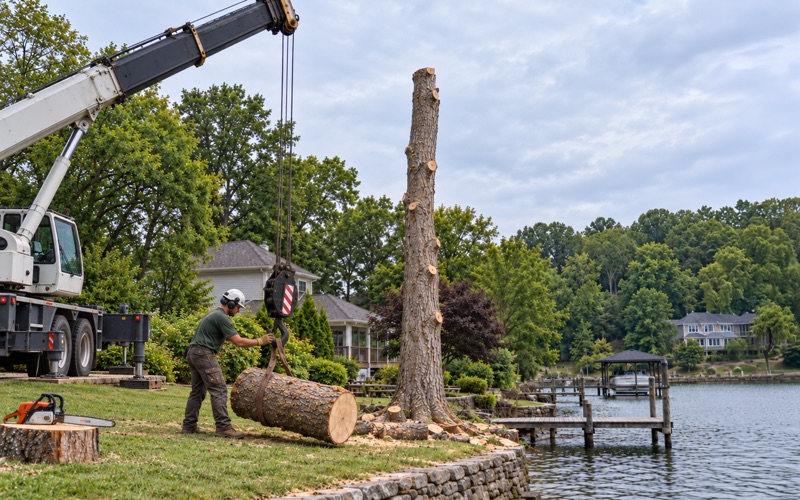
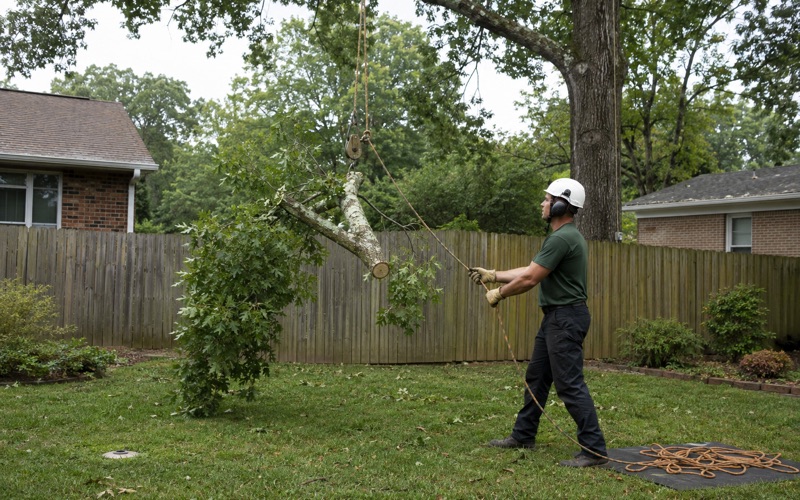
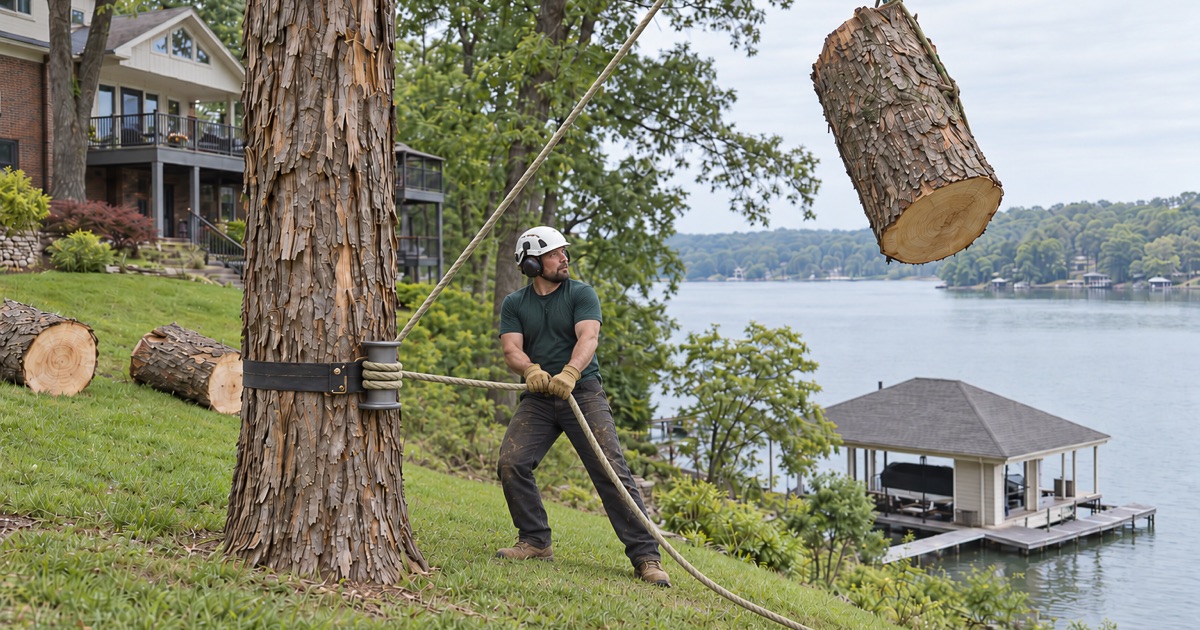
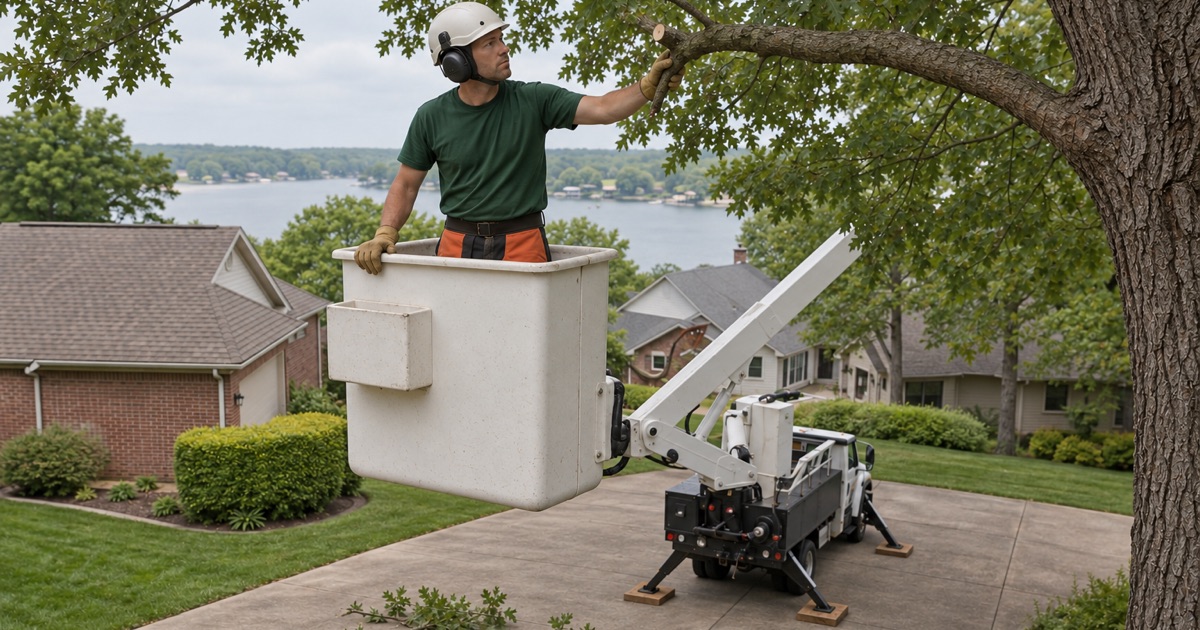
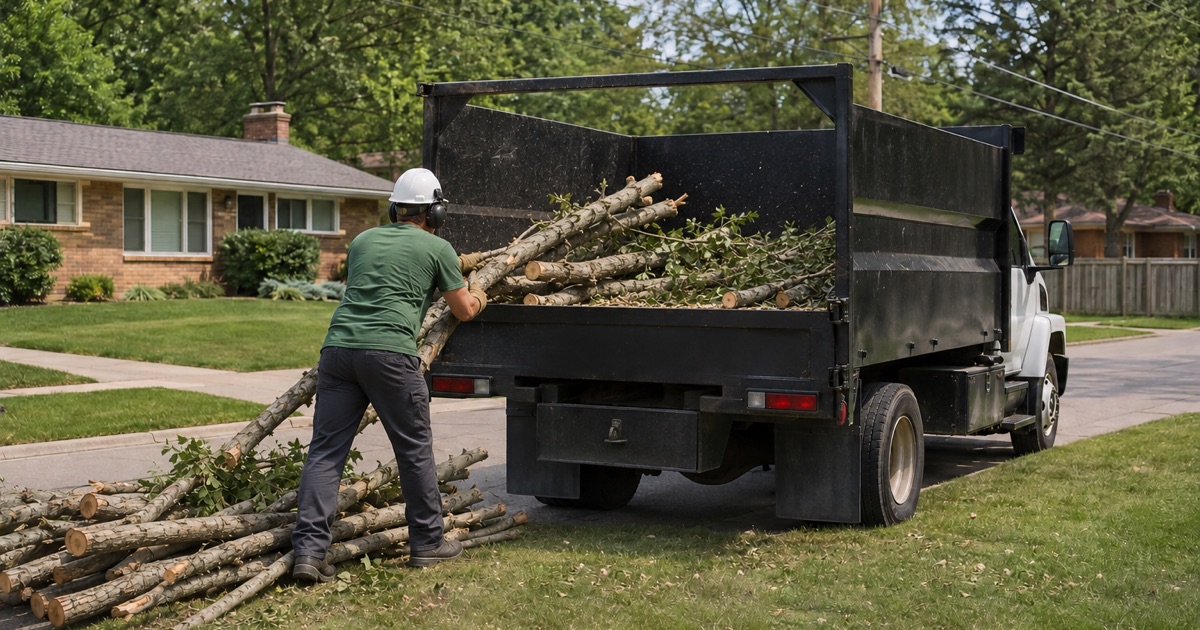
A mature tree comes apart into three separate disposal problems: brush that chips, trunk rounds too heavy to lift by hand, and the stump. Cut-rate quotes routinely cover the first and quietly leave the second in the yard. We state on the estimate what leaves and what stays, because rounds off a 30-inch oak are not something a homeowner moves with a wheelbarrow.
Why the City Will Not Collect Anything a Contractor Cut
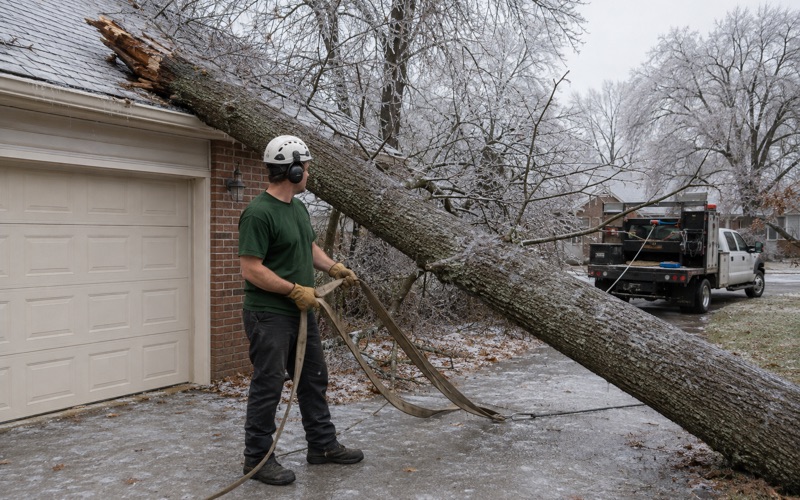
The city’s limb and brush program is for residents’ own material, and its rules say so directly: no commercial tree-cutting will be collected, and anyone hiring a tree service is told to have them haul the debris off. The resident rules are tight in any case — limbs no more than 18 inches in diameter and 8 feet long, piles no larger than ten by ten feet, no vines or root balls.
Leaving the Firewood, and When That Lowers Your Price
Hauling is priced by weight, so wood that stays on site is weight nobody pays to move. If you burn, we cut trunk rounds to a stove length you specify and stack them where you want them, and the estimate comes down accordingly. The trade is that green rounds need a year or more to season and occupy real space, so take the saving only if you will use the wood.
Surface Roots Lifting a Driveway or a Patio
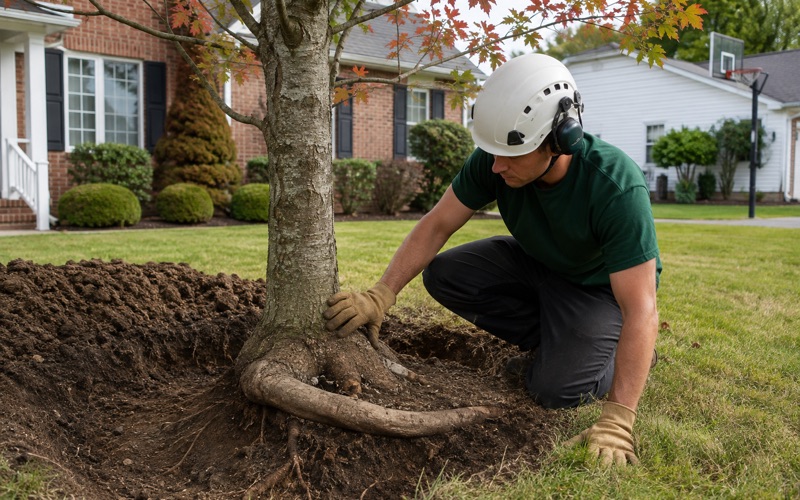
A root lifting concrete is load-bearing, and cutting it to save the slab can destabilize the tree that owns it. The assessment comes first: how large the root is, how close to the trunk, and what share of the root plate sits on that side. Sometimes the answer is a flexible paving repair or a root barrier at a safe distance; sometimes the tree and the driveway cannot both stay.
Lot Clearing and Forestry Mulching for a Build Site
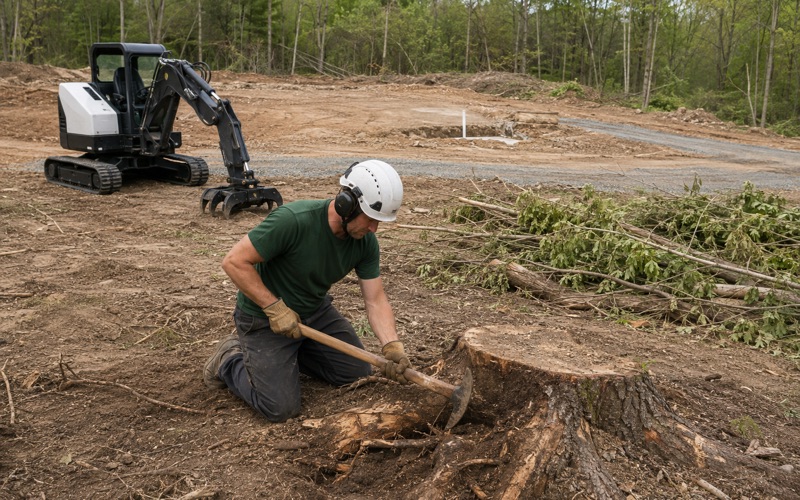
Clearing a build site is a permitting exercise as much as a machine exercise. Sumner County issues no land disturbance permit until the County Engineer has approved construction plans including grading, drainage and erosion and sediment control, stamped by an engineer registered in Tennessee. Inside the city, section 11.4.12 adds dripline fencing and replacement at 100 percent of DBH for anything cut within two years of a site plan.
Brush, Hedge and Overgrown Fence Line Clearing
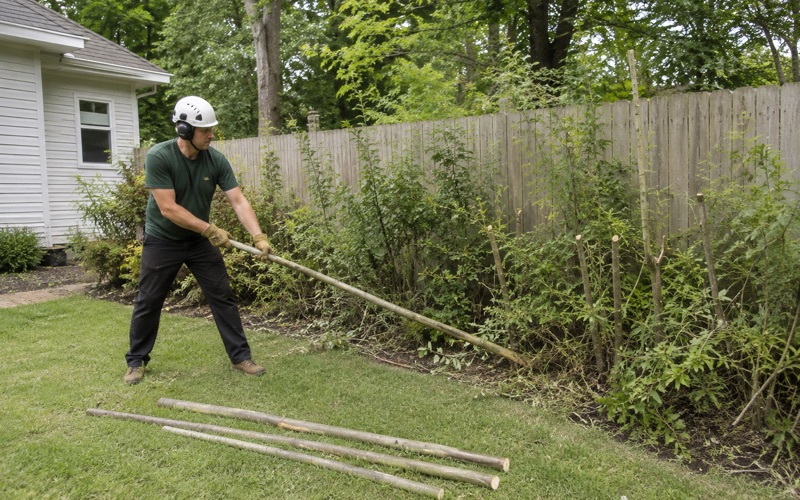
A fence line left alone for a decade is rarely just brush. It is volunteer Callery pear, honeysuckle, poison ivy vines thick enough to hide the wire, and often the boundary itself somewhere underneath. We clear to a line you have agreed rather than to the vegetation, check the trunks we cut for spotted lanternfly egg masses, and tell you what the fence looks like before you budget repairs.
Hauling, Tipping Fees, and Where the Wood Actually Goes
Disposal is a weighed transaction, not a rounding error. The Sumner County Resource Authority takes brush and wood at $45 per ton with a $10 minimum, and Gallatin’s fee schedule classes stumps and root balls as heavy construction at $58 per ton against $27 per ton for brush — which is exactly why a stump is billed separately from the removal that produced it.